
Stories of Latino New York: Bobby Marin
Posted on may 22, 2023
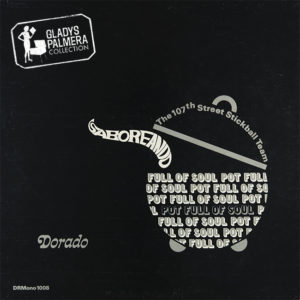
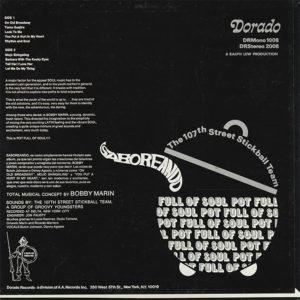
I was born on 107th Street in West Harlem. I grew up during the era of gang wars., says Bobby Marin, recalling an album titled Saboreando-Pot Full of Soul, featuring musicians he specifically brought together for the recording. He named the band The 107th Street Stickball Team in honor of the neighborhood boys he used to hang out with during his youth.
I sang in a group called the Del Chords on my block. We performed at the Apollo Theater’s amateur night a couple of times.
We used to rehearse, usually in the hallways of the building to get that echo effect. Then people would say, “Be quiet!” They’d kick us out, so we’d go outside. Our friends would be playing, banging on cars and garbage cans, and a couple of them had congas, so we started asking them to play with us. We’d sing the songs, and they’d play Latin rhythms. All of this was before boogaloo, but it’s what boogaloo eventually became.
So, years later, I decided to put together the 107th Street Stickball Team, with the Latin Chords, which was my later vocal group, and combine them with Orlando Marín and some of the other guys who played in the streets. Since it was released on MGM Records, it was never promoted. But there was some good material.
Marin, now 82, works from his home in Florida, where he runs his independent record label, and often conducts business over the phone. One recent afternoon, he was expecting a call from the king of Latin soul, Joe Bataan, a longtime friend from his youth. He vividly describes those days as a prolific and competitive era for recording, when, despite record labels’ interest in what was happening in El Barrio, they often didn’t know what to do with the music. Some great albums suffered from a lack of marketing strategy and were only appreciated years later, when collectors or DJs rediscovered them.
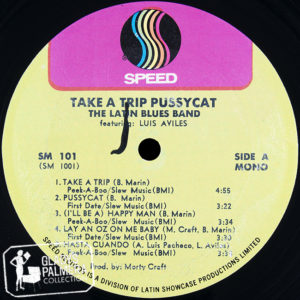
Such was the extraordinary case of (I’ll Be a) Happy Man, a song Bobby Marin wrote for a group called The Latin Blues Band. The track was sampled in Christina Aguilera’s song Ain’t No Other Man, which won a Grammy Award in 2006. Marin was not credited on the pop star’s song.
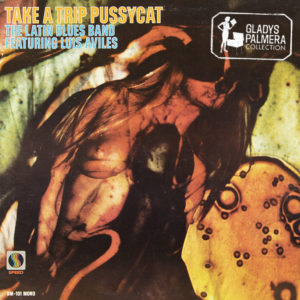
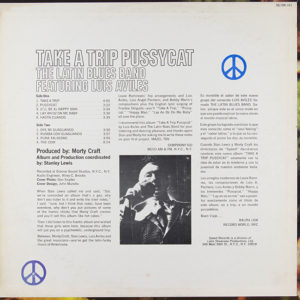
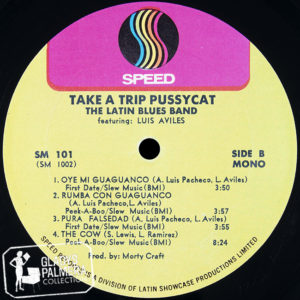
(I’ll Be a) Happy Man originally appeared on Take a Trip Pussycat, an album by The Latin Blues Band, another group formed by Marin himself. Marin recalls recording the album, which was released with an unusual, almost sadomasochistic cover photo:
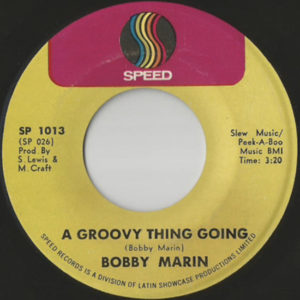
“The guy who produced it was a famous rock and roll producer, Morty Craft. He formed a company with Stan Lewis, Speed Records. They hired Louie Ramírez, whom I worked with extensively throughout the ’60s and ’70s, and me to produce and bring in some talent. So, in 1966, we brought The Latin Blues Band into the studio.”
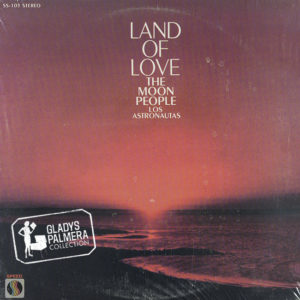
The Latin Blues Band later became Los Astronautas, also known in English as The Moon People. (I’ll Be a) Happy Man was re-recorded as Happy Soul and later once again as the instrumental Hippy Skippy Moon Strut. Over the decades, the single became a collector’s item and was eventually discovered by Aguilera’s producer.
“Christina Aguilera heard it and liked the background music, so they sampled it. They sampled the backing track, and she added her vocals.”
At the time, Marin was working as a consultant for Fania Records in Miami, the archetypal record label whose catalog was revived in the 1990s by EMusica.
“I only found out because I was working for Fania. One day, they asked me, ‘Do you know this song?’ They played only the instrumental part, and I started singing the lyrics. The Fania executive at the time said, ‘How do you know the lyrics?’
And I told him, yes, I knew them. Because I wrote them.
And you know I’m a jokester, so at first they didn’t believe me…”
They later helped Marin file a lawsuit.
“There were so many court cases! We won them all.
I was awarded 25% of the song’s publishing rights, and it became a huge, huge commercial success. So, in the end, it turned out to be something really wonderful in terms of royalties.”
The money allowed him to establish his own record label, Mambo Music. The label’s catalog of current releases and archival recordings includes previously unreleased gems, such as performances by Machito and Tito Puente.
“They’re classics,” says Marin, who has released the recordings as the beginning of a series of albums called The Early Years. “They date back to the 1950s. They were recorded on cassette at the Palladium Ballroom. You can hear Symphony Sid chatting with Tito Puente, and Machito talking with Miguelito Valdés. I kept the interesting parts, but I didn’t want to interfere too much with the music. Somehow, the music was recorded so well on a cassette player that I decided to use it.”
Marin will also soon release a jazz album by Tito Puente, produced by Marin’s older brother, producer Richard Marin, alongside whom Bobby began his own career.
“It’s a beautiful record, a mellow album featuring vibraphone and saxophone. Mostly bossa nova and jazz, very, very well done. I believe it was supposed to be released by RCA, but they never put it out. My brother had the tapes, and I decided to release it. It’s wonderful music.”
IN THE HEART OF SPANISH HARLEM
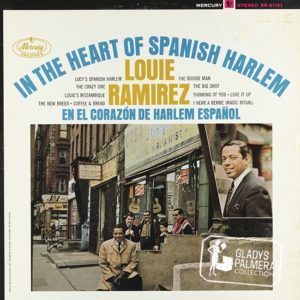
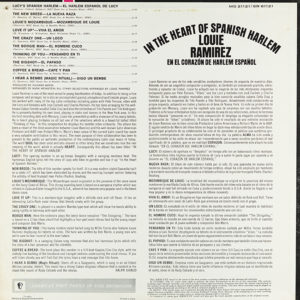
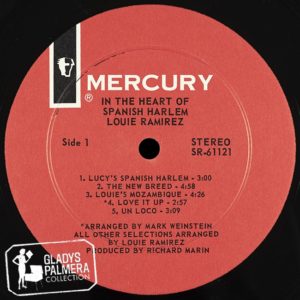
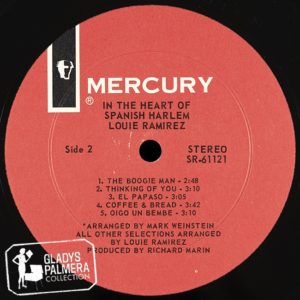
Marin recalls that in 1966, when he was 24 years old, he entered the recording studio to help his brother record The Heart of Spanish Harlem/En el Corazón de Spanish Harlem, featuring a band led by Louie Ramirez.
“That album was what really got me interested in producing.”
“I became friends with Louie Ramirez, and we started forming a songwriting team,” explains Marin. “We wrote, arranged, and produced so many boogaloo songs that everyone was asking us for material. When I was in the Air Force, I used to write songs for rock groups. When I came back, I still had that material, so we turned them into boogaloo songs.”
Lucy in Spanish Harlem opens the album.
“It’s a novelty song. We used the singers from Joe Cuba’s group, and I sang a lead part on that song because the others were committed to other songs. They told me, ‘You wrote the song, so you’re going to have to sing it.’ I said, ‘What? I don’t sing.’ And they said, ‘Well, do the best you can.'”
“My brother is on the album cover. The little boy in the picture is my brother’s son, who is now retired. That was such a long time ago. Richard is standing next to the guy from [the record store] Casa Latina [Alfonso Rubio]. He paid to appear on the cover, so my brother put him on the cover in front of his store.”
“It’s a phenomenal album, but it was on Mercury Records, and they didn’t have a Latin division, so they never promoted it or did any marketing for it. My brother kept the recording rights, and it sat there for years. But little by little, I’ve been releasing singles from the album.”
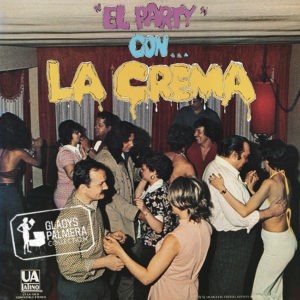
The cover photo of another album from that era, El Party con… La Crema, was taken at a party at Marin’s house.
“I’m dancing with my ex-wife toward the back. I had long hair. My ex-wife has her back exposed.”
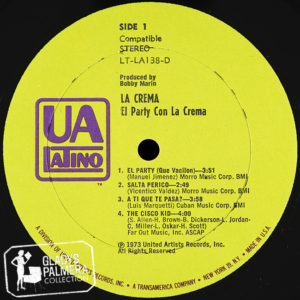
“A lot of good songs came out of that album and were played at different venues around town, but one song in particular stood out: the opening track, ‘El Party.’
“The whole album is about a party. So, if you listen to it, it starts with the doorbell ringing, and someone says, ‘Hey Bobby, I’m not going to miss the party of all parties.’ There are also cocktail-party sounds mixed in, making it sound as though there’s an entire party going on. From beginning to end.”
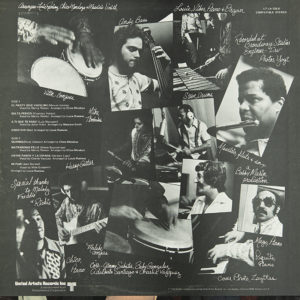
“The idea came about when I was producing for UA Latino, and Joe Cuba’s band had broken up. They had a sextet and had always been great at selling records. So I said, ‘Hey, I’m going to put together a sextet and see if we can fill that gap.’ We brought the sextet together, and everyone was a star, a top-notch musician. In fact, I think they were even called the Latin Allstars.”
He points to another dancer on the album cover:
“There’s the founder of Alegre Records, Al Santiago. He’s standing in front with his daughter. Al was my mentor. I followed him everywhere when I was first learning the business.”
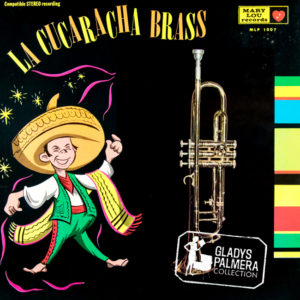
“I worked for a small record label that had a record store on Prospect Avenue in the Bronx called Mary Lou. Al had a very popular record store just a few blocks away called Casa Alegre. Everyone went there to buy the latest releases. I went there to sell him records, we became friends, and he asked me to join his company.
“There are so many stories that came out of my association with Al.
“Here’s a good one: Al Santiago was recording two new albums, but he ran out of money, and the studios were going to destroy the recordings if he couldn’t come up with the $2,100 he owed. So I spoke with Al, and he told me, ‘If you can get the money, I’ll sell you both albums.’
“One of the albums was Joe Bataan’s Gypsy Woman. The other was the first album by Willie Colón, El Malo.
“And I spoke with Willie. He was 18 years old at the time. I took my brother Richard to see them perform, and he saw the audience’s reaction.
“He told me, ‘Well, Bobby, I’ll go to Decca Records and ask them if they’re interested.’
“Decca Records and other major record labels were reluctant to work with musicians who weren’t members of the musicians’ union. So we came up with a plan in which Decca would pay for their union membership instead of a recording fee. So I was with my brother at the studio we had arranged for Joe Bataan to record Gypsy Woman.
“I remember there was a snowstorm, and he wasn’t showing up. Finally, I got a call from Joe. He said, ‘I don’t know how to tell you this, Bobby, but I just signed with another company.’ I said, ‘What?!’
“He told me, ‘[Johnny] Pacheco, his lawyer, and Symphony Sid have a new company. I think it’s called Fania.’
“I said, ‘Fania? What’s that, a disease?’
“I asked him, ‘Are you sure you want to do this?’ He replied, ‘I’ve already signed.'”
“And I said, ‘Well, at least I’ll have the Willie Colón album.’ Then he said, ‘Wait a second.’ And Willie got on the phone and said, ‘I don’t know how to tell you this, but…'”
“Al Santiago sold Alegre to Morris Levy, the gangster who owned Roulette Records. Al made me go with him to the meeting, so I know everything that happened. That was sometime in the 1970s, I suppose. Eventually, Morris sold everything to Fania, which is how Fania ended up with all that incredible music. But Fania was also the antithesis of what I was trying to do. They had such tight control over the radio stations that I couldn’t get them to play my music.
“Al was a good man.”
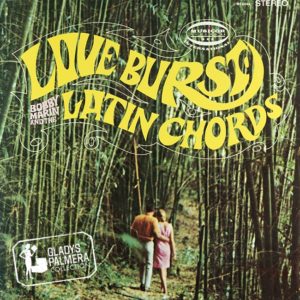
Bobby Marin & The Latin Chords – Love Burst
“Al Santiago went on to become the head of the Latin division at Musicor Records. They had Tito Rodríguez and one or two other Latin artists, but they also had The Platters and Gene Pitney. It was a pretty decent record label. Things were good. They didn’t give him a very big budget to release music, so they told him, ‘Why don’t you use some of the backing-track recordings we already have and then find someone to add the vocals?’
“Al liked our group, so we decided to make an album with The Latin Chords. We had tracks from The Platters and other groups. So it was kind of a hodgepodge, but it’s a cult classic. Nowadays, people pay $500 or $600 for the album.”
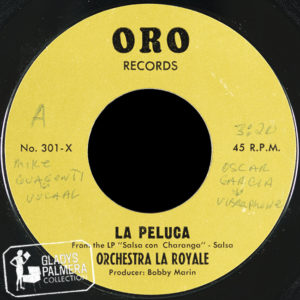
Louie Colón – La Peluca
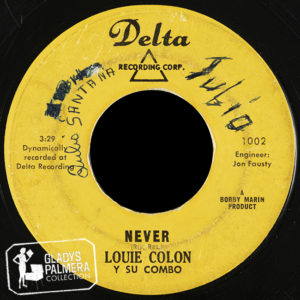
“I signed Louie Colón to United Artists. We made about three records. ‘La Peluca’ was one of the favorite songs. It’s about a guy who’s bald, and the band’s leader, Louie Colón, was bald, completely bald. We used to tease Louie Colón about his baldness, so we got someone to write a song about it. Louie Ramírez was the arranger.”
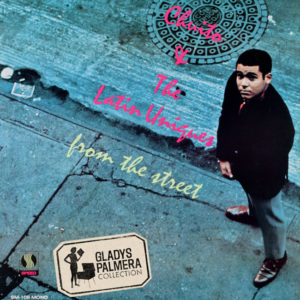
Chuito & The Latin Uniques – Desde la Calle
“He was one of the artists we brought to Speed Records. He was part of the whole boogaloo craze. They needed a singer. We were walking along Broadway when the cast of one of the Broadway shows was outside taking a break. I was walking down the sidewalk with someone when they greeted a guy named Tony Middleton. He was part of the Broadway show. So we asked him, ‘Hey, would you like to make a recording?’ When the show ended, he came to the studio and recorded a couple of songs.”
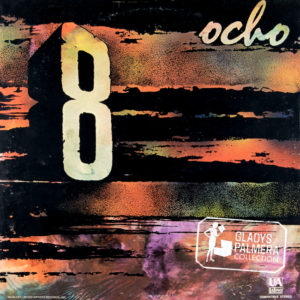
Ocho – Ocho
This is one of the records I’m most proud of. When I was at United Artists, we were looking to sign interesting groups. So the artistic director, Chico Álvarez, who now leads his own band, suggested I listen to Ocho because they were from New Jersey, where he was from. They came in for an audition, and I fell in love with them. They were an all-Black group, and they played some of the best Latin music you could hear.
“Most of it was uptempo Latin jazz, so I loved it. But I told myself, ‘We need singers, so I brought in Manny Román to sing lead vocals, and I brought in Jimmy Sabater, Willie Torres, and Ismael Quintana, some big names, to sing background vocals. I wrote material for them, and Chico Mendoza, the bandleader, wrote the arrangements. People loved this album. It has some great material. Old Cuban songs that were reworked. ‘Ay Qué Frío’ was one of the songs we did. It’s an old Tito Rodríguez song. We ended up making about four or five albums with Ocho. A very special group.”


